My novel about love, betrayal and chess in New Orleans: The Pride and the Sorrow

Tuesday, September 15, 2009

Ronan Bennett and Daniel King on chess: how to find the best square for a threatened piece

Ronan Bennett, Daniel King
Tuesday September 15 2009
The Guardian
--
We thought that with our latest relocation it was time to reintroduce ourselves and to remind readers that this is a different kind of chess column. We don't bring you the latest tournaments (the internet does that a lot better), or annotate games by the greats (better left to anthologies and magazines). Instead, we try to provide the enthusiast and the club player, those for whom chess is a hobby rather than a profession, with useful advice and exercises in the form of a "master-student" dialogue between an average player (RB) and a grandmaster (DK).

Some of the positions we look at involve fairly high levels of chess understanding, but we also like to explore the kind of things ordinary players might encounter. Today's position falls into the latter category, and kicks off a series of columns themed around the question of finding the best square for a threatened piece. So where should the queen move to?

RB This looks rash, but since the queen is out we might as well go for it: 1 Qxc5. I'm expecting either 1...Nxe4 or 1...e6.

DK If you play the queen out so early, you are either very good or very bad. It's a beginner's ploy, vainly hoping for a quick checkmate. But if your opponent has an ounce of nous, the queen will be beaten back and you will have merely lost time. Ronan decides that he may as well grab a pawn, but Black recaptures, 1?Nxe4, and attacks the queen again. If 2 Qe3, Black plays 2?d5, staking a claim in the centre, and already has the more promising position.

However, if one is very careful, it is possible to play so outlandishly. The rising American star Hikaru Nakamura has made a speciality out of this shock tactic. Instead of taking the pawn, he has tried 1 Qh4. Now it is harder for Black to push the queen around, and if he castles on the kingside, the king could come directly under fire. But perhaps one needs to have the talent of a prodigy to make this work. The old rule of developing knights and bishops before anything else should still apply to most of us.

--

guardian.co.uk Copyright (c) Guardian News and Media Limited. 2009


Friday, September 04, 2009

The Ten Commandments of Blogging

Published in Pimp My Novel: September 3, 2009
--
1. I am thy blog. If you're an author, you should already have a blog. If you're not yet published, now is the time to start.

2. Thou shalt have no other blogs before me. We all love reading blogs—we wouldn't be here if we didn't—but yours comes first. Write your own posts before you spend all afternoon reading someone else's.

3. Thou shalt not make of thyself an idol. Keep your ego in check; you always want to portray yourself positively in your blog. Your reputation is all you've got in this business, and if you earn yourself one as a likable person as well as a great writer, you're a golden calf.

4. Remember thy Schedule and keep it, wholly. You don't have to write a post every day, but keeping a regular schedule is a courtesy and a sort of unwritten contract between you and your readers; they'll know when to expect new content and will come to appreciate and respect you for that.

5. Thou shalt honor thy agent and thy publisher. You couldn't have done this without them. Give props where props are due.

6. Thou shalt not commit character assassination. Everyone has authors or critics they don't like, sometimes personally. Don't pull an Alice Hoffman. And, I guess, don't try to kill anyone in real life, either.

7. Thou shalt not commit adultery, but thou shalt pimp thyself. No one sells you like you do. Facebook, Twitter, &c. The more pervasive your presence, the more likely it is that people will buy your book.

8. Thou shalt not plagiarize. Always quote. Always cite your sources. Always link back to them if they're on-line.

9. Thou shalt not deceive thy audience. Never post anything you don't believe is true, and be sure to provide links to any research you've done. Always be sure to clarify whether a point you're making is an opinion or a fact.

10. Thou shalt monetize. I don't do it because I don't consider blogging a part of my livelihood, but you, as authors, should consider self-promotion as part of the job. Let Google or whomever run a few relevant ads on your blog and make a little cash on the side. (Unless you've got a large readership, though, it probably won't be much.)
---
Copyright 2009 Pimp My Novel


Monday, August 31, 2009

Chess and the KGB novel - "an exciting and memorable read"!

Viv Groskop
Sunday August 23 2009
The Observer
---
Spring 1948 and Aleksandr, a KGB major, is sent to an isolated psychiatric clinic in the Urals to investigate Anatoly Yudin. A famous pianist in the 1930s, Yudin disappeared during the Second World War and was presumed dead. Now he has resurfaced and has a strange form of amnesia. Or does he? Aleksandr suspects Yudin may be writing anti-Soviet tracts. Does Lozovsky, Yudin's doctor, know something? The story is told by Aleksandr, looking back from 1972 as he begins to see the whole of Soviet history - and the role he has himself played - in a different light.

With Aleksandr, David Szalay, winner of the Betty Trask Prize 2008 for his debut London and the South-East, has created an extraordinary character, a KGB man you can imagine knowing or even being. Aleksandr is an idealist, a "real" communist, who truly believes in the system and wants to do the right thing. Anyone who has seen the German film The Lives of Others will recognise the type: he's a cousin of Stasi Captain Gerd Wiesler, another Everyman who suddenly finds himself questioning everything he has ever believed.

This, then, is a similar situation in Soviet form. Szalay's trick is to make us feel for Aleksandr and sympathise with his dilemmas, while inserting the odd chilling clue as to what's really going on. ("Turn off his light," he says to the officer guarding a man under interrogation and we suddenly realise the conditions the prisoner has been kept in.) Aleksandr's journalist brother, Ivan, offers a foil to the ideological purity; he is prepared to take risks and sees the flaws in the system - until he becomes a beneficiary of it himself. Over the course of the book, the two brothers swap roles, with Aleksandr becoming more disillusioned and Ivan happily riding the gravy train.

The novel's focus swings dramatically between the two brothers' changing relationship and the fate of Yudin and Lozovsky, until we, like Aleksandr, are no longer sure who's in the right, who is supposedly guilty and who really has done something wrong. The result is not so much a critique of the Soviet system - or of totalitarianism - as a comment on the uncertainty of life, how little we know others or even ourselves.

Woven into the narrative are fascinating accounts of historical moments, seen through the eyes of ordinary Soviets, which gradually affect Aleksandr's mindset: losing to the Germans 3-0 at football in the 1972 European Championship final; Bobby Fischer beating Boris Spassky at the Reykjavik chess championships. When Aleksandr's KGB mentor, a man whom he considers to be as trustworthy and "pure" as himself, is targeted, his world implodes. Meanwhile, there are scenes of quiet, comic desperation from everyday Soviet life. The KGB officer supposed to be intercepting Lozovsky falls asleep at his post. In a communal flat, people find themselves involuntarily registering what their neighbours last had to eat and when they last smoked a cigarette.

This is an exciting and memorable read. Expertly researched, it feels authentic, but wears its learning reassuringly lightly. Anyone who appreciated Martin Amis's Koba the Dread and Orlando Figes's The Whisperers will love it, as will fans of The Lives of Others or Burnt by the Sun. As with both films, the theme of silent, regret-filled horror is beautifully, chillingly captured.

---

guardian.co.uk Copyright (c) Guardian News and Media Limited. 2009


Sunday, August 30, 2009

Paul Morphy, Chess Player, World Champion!


Friday, August 28, 2009

Why'd He Do It? Post-Mortem of a Grisly New Orleans Murder

BOOKS
Books of The Times: Why'd He Do It? Post-Mortem of a Grisly Death
By JANET MASLIN
A sickening account of a murder and suicide that riveted post-Katrina New Orleans.

Zackery Bowen appears on the cover of “Shake the Devil Off” as a lanky, handsome guy in a baseball cap, sitting in the French Quarter of New Orleans and staring at the camera with the insouciance of an off-duty movie star. In one hand he holds a wine glass. In the other hand he holds a kitten.

No word on whether the kitten escaped Zack unscathed. But the soused-looking woman sitting next to him in this same photograph, Addie Hall, did not fare well. She wound up the victim of a murder that was grisly even by New Orleans’s high standards. Let’s skip the particulars except to say that “Gal Pal Gumbo” was The New York Post’s headline for a story about Addie’s grisly murder, and that one of the most pleasant assertions that Ethan Brown, Zack’s biographer, can make on his subject’s behalf is that rumors of Zack’s cannibalism were simply not true.

At this point it might be reasonable to ask why Mr. Brown decided to write a whole book about Zack, who wound up jumping off a roof after he messily dispatched Addie. One answer is that Mr. Brown happened to be in the neighborhood. He and his wife were celebrating their wedding anniversary in New Orleans in the fall of 2006, just as Zack and Addie and their story’s gory details became the talk of the town.

When Mr. Brown learned that Zack had endured a trifecta of earlier nightmares — military service in Kosovo, military service in Baghdad and then Hurricane Katrina — he wondered if this was not the story of a true American tragedy. So he decided to delve (his word, though wallow would be more accurate) into the sad particulars of Zack’s unrelentingly seedy life.

In his hagiographic “Zeitoun” Dave Eggers uses the Katrina ordeal of a single brave man to embody the transcendent decency that helped Abdulrahman Zeitoun survive a terrible ordeal. “Shake the Devil Off” is the flip side of that story. It becomes a bottom-feeding account of boozy, mindless cruelty despite Mr. Brown’s strenuous efforts to give it the moral heft of a war story and to paint Zack as a victim of post-traumatic stress disorder.

This is not to say that Zack didn’t suffer, or that his suffering was not in some way emblematic of other veterans’ experiences. It’s to say that Mr. Brown, who reports this story with a heavy hand, tin ear and salacious eye, doesn’t make it matter.

“Shake the Devil Off” is filled with inarticulate testimony about who Zack was and how he got that way. When his father became a bartender at strip clubs, Zack’s mother says, “I was like, ‘This isn’t how it’s supposed to be.’ ” The crushing disappointment of Zack’s failure to become homecoming king at his California high school in 1995 is duly described.

So is the mating call (“Ya’ll want a shot of Jägermeister?”) with which 18-year-old Zack wooed Lana Shupack, the 28-year-old stripper who would become his wife. Once Zack enlisted in the 709th Military Police Battalion, Lana and her co-workers kept Zack supplied with strip-club photos that did not boost his morale.

The sections of the book that are about Zack’s exposure to war are no less perfunctory. The book explains how the spunkiest, most patriotic member of Zack’s unit, a young woman standing barely 5 feet tall to his 6 feet 10 inches, became an early casualty, and how this and many other losses around Zack hurt him. “He was happy-go-lucky and then he was just depressed,” one Army friend recalls. Zack’s size-17 ill-fitting boots and hammertoe troubles also become part of Mr. Brown’s story.

Bristling from a “general (under honorable conditions)” military discharge (instead of the “honorable discharge” his commander had recommended), which he found deeply unjust, Zack returned to New Orleans with a zest for bartending and not much else to sustain him. Then he met Addie, who is described here as having been a wonderful person except on those occasions when she wasn’t and whose abusive, alcohol-fueled “spells” were well known to those around her.

Yet Zack and Addie found something to make them flourish: the evacuation of New Orleans during Katrina and their decision to wait out the storm (“We’re bartenders so we’re well stocked”) in what Mr. Brown calls a “poststorm Shangri-la.” The storm that caused surreal misery for Mr. Zeitoun and his family was a kind of aphrodisiac for Addie and Zack.

“They liked the lifestyle we had during the hurricane,” a friend reports. “They liked camping out. They liked not having to work. They liked not having the responsibility of paying bills. They didn’t like the change back to normalcy.” But the flood waters retreated, taking with them some of Zack’s sanity. Still, he retained the ability to compartmentalize that he had developed in the service, to the point where he could calmly make notes about Addie’s decomposing body after having killed her during one of their frequent fights. Zack could forget all about Addie, go out bar hopping, pass out in a drunken stupor and only then remember that he had a girlfriend problem.

“Shake the Devil Off” sees all this as part of a tragic arc. And it spares no occasion for voyeurism. Once the story is over and Mr. Brown still has pages to fill, he assails the United States government policies regarding war, Katrina and veterans’ rights.

He watches television. (He is angered by Michael Moore’s high-handed hurricane talk on Keith Olbermann’s show.) And he resorts to domestic details of his own. The news that one of his dogs threw up in the back seat of his car at the time of Hurricane Gustav is one of the less sickening parts of Mr. Brown’s story.
---
Copyright 2009 The New York Times Company | Privacy Policy

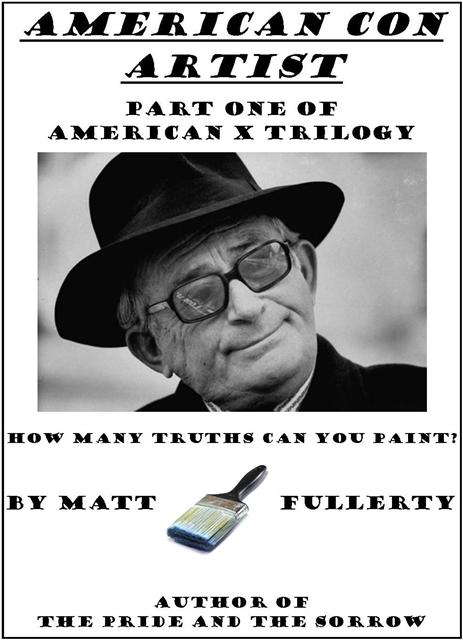
My novel about painting, criminality, and the greatest art forger of the twentieth century!

My novel about painting, criminality, and the greatest art forger of the twentieth century!
Please click the cover!

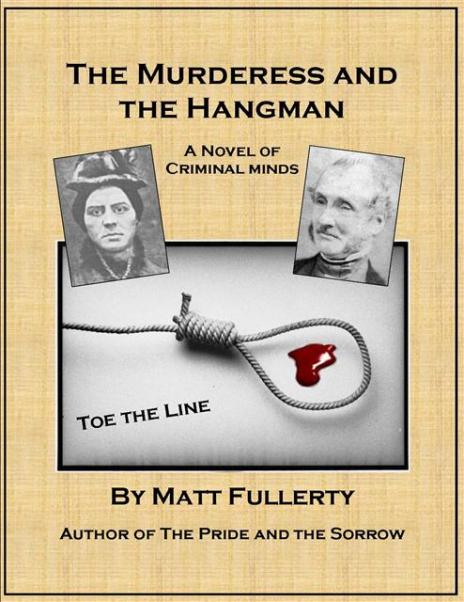
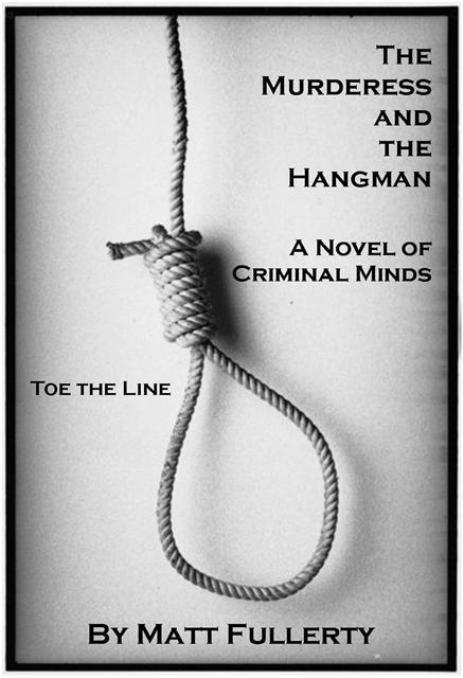
My novel about London, murder, mayhem, and a female killer!

My novel about London, murder, mayhem, and a female killer!
Please click the cover!

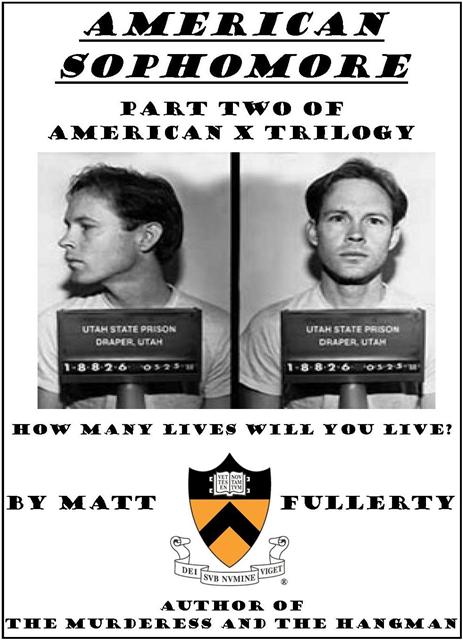
My novel about running, Princeton University, and a conman who lost it all!

My novel about running, Princeton University, and a conman who lost it all!
Please click the cover!

My novel about love, betrayal and chess in New Orleans

My novel about love, betrayal and chess in New Orleans
Please click the book!

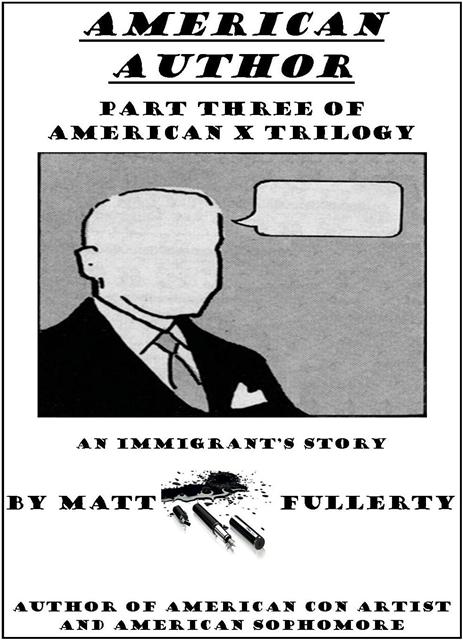
My semi-autobiographical novel about a very British education and becoming an American!

My semi-autobiographical novel about a very British education and becoming an American!
Please click the cover!

My novel about London, murder, mayhem, and a female killer!

My novel about London, murder, mayhem, and a female killer!
Please click the cover!