My novel about love, betrayal and chess in New Orleans: The Pride and the Sorrow

Showing posts with label raymond carver. Show all posts

Thursday, December 31, 2009

2009 was the year of the short story

Alice Munro

Alice Munro's Man Booker International win boosted the profile of the short story form.

--

Alice Munro won the Man Booker International, Raymond Carver's widow published a revised edition of What We Talk About When We Talk About Love, and fine collections appeared from old hands and debutantes. This year proved that reports of the short story's death have been greatly exaggerated.

2009 has proved that rumours of the death of the short story – so often forecast that almost every review of almost every collection seems duty-bound to repeat and thus propagate it – are greatly exaggerated. The consensus running through the end-of-year reviews is that it's been a vintage year for short fiction, and I agree. I come here to praise the short story, not to bury it.

Starting at the top, one of the world's greatest living short story specialists, and one of its greatest writers full-stop, took the 2009 Man Booker International prize. Canadian Alice Munro published her 14th collection, Too Much Happiness, earlier this year. A powerful grouping of stories more violent than her normal work, it shows her enormous talent remains undiminished as she nears her ninth decade.

Mavis Gallant is already well into hers, and while no new work is forthcoming an edition of her previously uncollected stories, The Cost of Living, has just been published. As for the brand new, this year saw collections from big names such as Kazuo Ishiguro, Ha Jin, Chimamanda Ngozi Adichie, James Lasdun, and this parish's own AL Kennedy.

Good work from the living, then, but notable new collections issued even from beyond the grave. Raymond Carver's Beginners reinstates the writer's original drafts of the stories that made up his definitive 1981 collection, What We Talk About When We Talk About Love; stories that his editor Gordon Lish famously and controversially reduced in length, in some cases cutting up to 78% of Carver's prose. I had misgivings before reading it, but Beginners is a fascinating document. The decision to publish these versions is controversial, but the logic behind his widow Tess Gallagher's desire to show the "connective tissue" between his pre- and post-Lish work seems sound. Additionally the endnotes, wherein the editors detail what revisions were made where and when, are like morsels of crack for Carver geeks.

This has also been an excellent year for debuts. I read David Vann's Legend of a Suicide and Wells Tower's Everything Ravaged, Everything Burned back to back, and while their shared interests – hunting, ichthyology, destructive rages, divorce, abuse and guns – might lie heavily on their readers' psyches, the quality of the writing precludes any chance of leaving them depressed. Both superb, Vann's book in particular suggests the arrival of a significant talent; one who can marry tremendous plot twists to an appealingly downbeat style that fans of Carver and Cormac McCarthy alike will thrill to.

In case you're wondering what Legend of a Suicide, supposedly a novel, is doing in a blog about short stories, it was originally published as a story collection in America. Vann told the Guardian he prefers the way the book is being sold in the UK, but really it sits somewhere between the two forms: the stories are discrete, but at the same time are all reactions to or descriptions of a single central event. Another book that hovers in this enjoyable and I think fertile space between the story collection and the novel is this year's Pulitzer winner, Elizabeth Strout's Olive Kitteridge, a story cycle set in Crosby, Maine, and presided over by the retired schoolteacher of the title. It's sold upwards of 400,000 copies so far: impressive for a literary novel, extraordinary for short fiction.

Of course, all this jubilation would be Panglossian without some acknowledgement of the short story market's real and present downsides. In the US it's commonplace for short story writers to get a deal for their first collection only on the proviso that a novel follows, a business practice that casts short story-writing as apprentice work. In the UK it's worse still, with story collections treated like dirty secrets to be snuck out in disguise (pace Penguin's strategy with Vann), with only a determined study of the back cover revealing the truth. And I don't know if it's a case of reading practices following publishing's lead or vice versa, but I'm constantly surprised and disheartened by the number of readers who tell me they don't read short stories, as if they were a homogenous type that could be not to your taste like, say, policiers.

I do see more reason to celebrate than to mourn, however. Radio 4 broadcasts nearly 150 stories a year; the Atlantic's recent decision to sell short stories via its Kindle store inspires hope for a vibrant market for individually sold shorter works, while flash fiction and sites dedicated to the short story continue to proliferate online.

This year saw the US publication of the Collected Stories of Lydia Davis, a particular favourite of mine, whose sharp, hilarious, often minuscule fictions have long had a small but dedicated following. She's the next subject in the short story series I've been writing for the last couple of years, and in the words of the New Yorker her body of work "will in time be seen as one of the great, strange American literary contributions, distinct and crookedly personal." Hamish Hamilton have just picked up the UK rights, so British readers as yet unfamiliar with her will soon have an even better chance to find out how good she is. It looks like 2010's already shaping up to be another good year.

--

Chris Power, The Guardian, Tuesday 29 December 2009


Friday, October 30, 2009

A trick question for Raymond Carver?

Raymond Carver

The master of minimal storytelling loathed experimentation in fiction, but his hated 'licence to be silly' is vital to the life of short stories

Conventional reading ... Raymond Carver in 1984. Photograph: Bob Adelman/Corbis

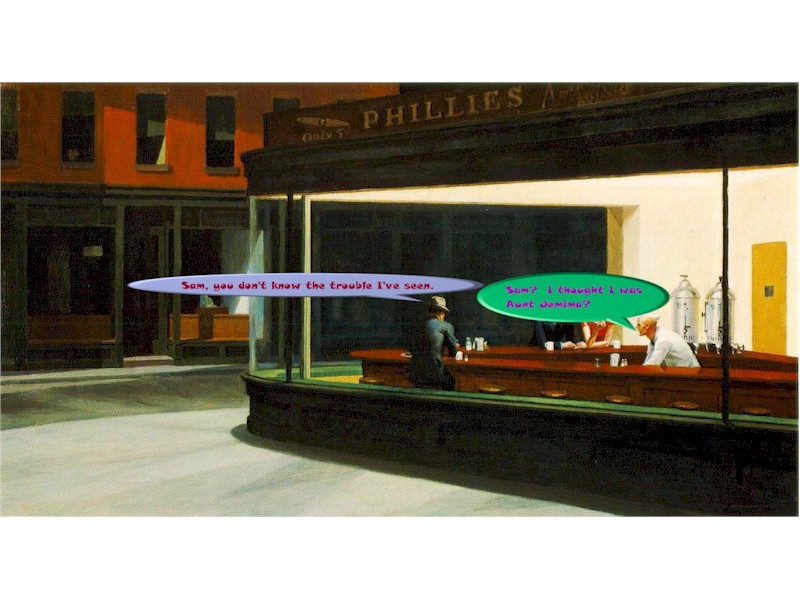
Speaking at the Manchester Literary Festival, James Lasdun – probably the closest in recent years this country has come to a genuinely great practitioner of the short story – expressed dismay at the publication of Beginners; the original, more expansive version of Raymond Carver's minimalist masterpiece What We Talk About When We Talk About Love. Unlike Blake Morrison, who saw it as a revelation, Lasdun suggested that this was muddying Carver's great legacy. Reading the two volumes side by side, I found it hard not to agree with Lasdun; in all too many cases it's like looking at a Edward Hopper painting to which someone has added graphic-novel-style thought bubbles.

The rights and wrongs of publishing these stories before editor Gordon Lish took a scalpel to them can be debated, but there's no doubt that this publication has once again put Carver in the limelight – if he'd ever really been in the shadows. Carver is, I suppose, the ultimate modern short story writer. His fiction has a resonance that is attractive to both readers and writers. How he achieves this mesmerising effect is set out in his essay "On Writing", published in the same year as his much shortened version of Beginners.

"On Writing" is Carver's vision for fiction; his blue-collar blueprint. It's a fine and persuasive piece, full of insight into the creative process and the obligations of the writer. There are moments of personal confession, coupled with elegantly quotable sentences – "Get in, get out. Don't linger" for example. But as with his very best writing, there is a darker, less palatable truth lurking within its pages.

The lessons that Carver provides are second hand ones, derived from creative writing teachers and authors he admires. This is no criticism when you consider his mentors are Chekhov, Isak Dinesen, Isaac Babel and Flannery O'Connor. The advice, it seems to me, is well chosen. Trusting your instincts, while also being open to new discoveries; to write a little each day without despair; to revel in the mysteries of revelations.

All good – if slightly non-specific – advice, told in a considered, conversational tone. But then, Carver hits you with a curve ball. "No tricks." He says. "Period. I hate tricks." Experimentation, as Carver goes on to say, is too often "a licence to be careless, silly or imitative." Which in amongst the homilies and creative class wisdom changes his essay from a fascinating insight into his working practices, into a manifesto. A sort of write-in-a-day-the-Raymond-Carver-way.

I like tricks. I like formal invention; not for its own sake, but in the sense that it gives the reader something to think about, to look at from another angle. To be told that this is wrong, somehow mistreating the reader, made me suddenly quite angry. What about Barthelme, I thought, Sterne, BS Johnson, Angela Carter? And what about perhaps this year's most feted story collection, David Vann's Legend of a Suicide?

Vann's book seems initially to conform to all Carver's edicts. It is polished, elegant and beautifully written; fitting into an American lineage that encompasses Ernest Hemingway, Cormac McCarthy, Richard Ford and Tobias Wolff. But then halfway through, Vann does something transformative, something that you simply don't see coming and nothing is the same again. You could call this a "trick", but to me it's something approaching genius.

When people talk negatively about creative writing classes and the kind of fiction they produce, it's precisely Carver's prejudice against invention and tricks to which they are usually alluding. New voices are stifled behind rules and conventions, like Carver's, that should be challenged and bent and railed against. Innovation – as Vann and his fellow countryman Wells Tower prove – is what keeps the short form vital and alive, despite its status as a commercial pariah for publishers.

For all Carver's disdain for experimentation, even Donald Barthelme and BS Johnson would look on admiringly at the effect of Beginners. How much would they have enjoyed readers holding two versions of the same stories, reading them side by side? And how ironic that a writer who said that he "ran for cover" at the sight of a trick, has now become the newest trick in town.

--

Stuart Evers
Wednesday 28 October 2009
The Guardian

(c) Guardian News and Media Limited. 2009


My novel about painting, criminality, and the greatest art forger of the twentieth century!

My novel about painting, criminality, and the greatest art forger of the twentieth century!
Please click the cover!

My novel about London, murder, mayhem, and a female killer!

My novel about London, murder, mayhem, and a female killer!
Please click the cover!

My novel about running, Princeton University, and a conman who lost it all!

My novel about running, Princeton University, and a conman who lost it all!
Please click the cover!

My novel about love, betrayal and chess in New Orleans

My novel about love, betrayal and chess in New Orleans
Please click the book!

My semi-autobiographical novel about a very British education and becoming an American!

My semi-autobiographical novel about a very British education and becoming an American!
Please click the cover!

My novel about London, murder, mayhem, and a female killer!

My novel about London, murder, mayhem, and a female killer!
Please click the cover!