My novel about love, betrayal and chess in New Orleans: The Pride and the Sorrow

Friday, October 30, 2009

A trick question for Raymond Carver?

Raymond Carver

The master of minimal storytelling loathed experimentation in fiction, but his hated 'licence to be silly' is vital to the life of short stories

Conventional reading ... Raymond Carver in 1984. Photograph: Bob Adelman/Corbis

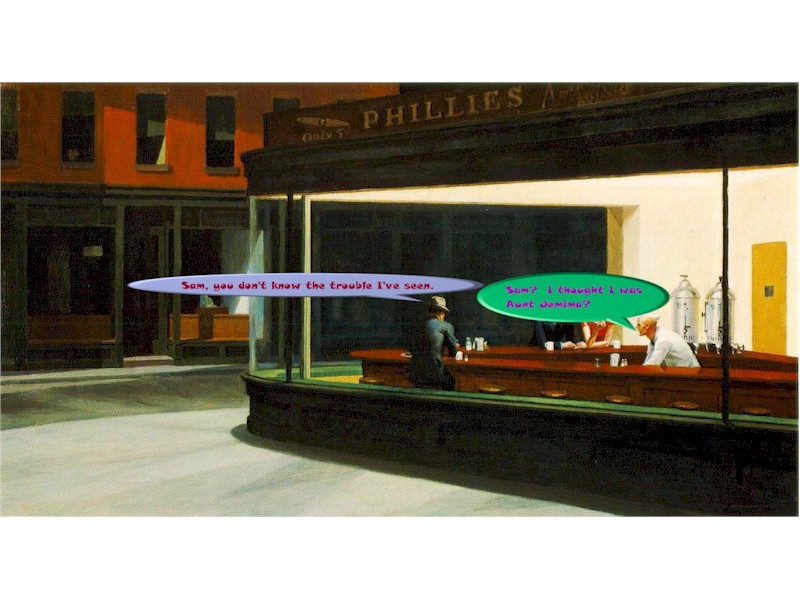
Speaking at the Manchester Literary Festival, James Lasdun – probably the closest in recent years this country has come to a genuinely great practitioner of the short story – expressed dismay at the publication of Beginners; the original, more expansive version of Raymond Carver's minimalist masterpiece What We Talk About When We Talk About Love. Unlike Blake Morrison, who saw it as a revelation, Lasdun suggested that this was muddying Carver's great legacy. Reading the two volumes side by side, I found it hard not to agree with Lasdun; in all too many cases it's like looking at a Edward Hopper painting to which someone has added graphic-novel-style thought bubbles.

The rights and wrongs of publishing these stories before editor Gordon Lish took a scalpel to them can be debated, but there's no doubt that this publication has once again put Carver in the limelight – if he'd ever really been in the shadows. Carver is, I suppose, the ultimate modern short story writer. His fiction has a resonance that is attractive to both readers and writers. How he achieves this mesmerising effect is set out in his essay "On Writing", published in the same year as his much shortened version of Beginners.

"On Writing" is Carver's vision for fiction; his blue-collar blueprint. It's a fine and persuasive piece, full of insight into the creative process and the obligations of the writer. There are moments of personal confession, coupled with elegantly quotable sentences – "Get in, get out. Don't linger" for example. But as with his very best writing, there is a darker, less palatable truth lurking within its pages.

The lessons that Carver provides are second hand ones, derived from creative writing teachers and authors he admires. This is no criticism when you consider his mentors are Chekhov, Isak Dinesen, Isaac Babel and Flannery O'Connor. The advice, it seems to me, is well chosen. Trusting your instincts, while also being open to new discoveries; to write a little each day without despair; to revel in the mysteries of revelations.

All good – if slightly non-specific – advice, told in a considered, conversational tone. But then, Carver hits you with a curve ball. "No tricks." He says. "Period. I hate tricks." Experimentation, as Carver goes on to say, is too often "a licence to be careless, silly or imitative." Which in amongst the homilies and creative class wisdom changes his essay from a fascinating insight into his working practices, into a manifesto. A sort of write-in-a-day-the-Raymond-Carver-way.

I like tricks. I like formal invention; not for its own sake, but in the sense that it gives the reader something to think about, to look at from another angle. To be told that this is wrong, somehow mistreating the reader, made me suddenly quite angry. What about Barthelme, I thought, Sterne, BS Johnson, Angela Carter? And what about perhaps this year's most feted story collection, David Vann's Legend of a Suicide?

Vann's book seems initially to conform to all Carver's edicts. It is polished, elegant and beautifully written; fitting into an American lineage that encompasses Ernest Hemingway, Cormac McCarthy, Richard Ford and Tobias Wolff. But then halfway through, Vann does something transformative, something that you simply don't see coming and nothing is the same again. You could call this a "trick", but to me it's something approaching genius.

When people talk negatively about creative writing classes and the kind of fiction they produce, it's precisely Carver's prejudice against invention and tricks to which they are usually alluding. New voices are stifled behind rules and conventions, like Carver's, that should be challenged and bent and railed against. Innovation – as Vann and his fellow countryman Wells Tower prove – is what keeps the short form vital and alive, despite its status as a commercial pariah for publishers.

For all Carver's disdain for experimentation, even Donald Barthelme and BS Johnson would look on admiringly at the effect of Beginners. How much would they have enjoyed readers holding two versions of the same stories, reading them side by side? And how ironic that a writer who said that he "ran for cover" at the sight of a trick, has now become the newest trick in town.

--

Stuart Evers
Wednesday 28 October 2009
The Guardian

(c) Guardian News and Media Limited. 2009


Martin Amis's problem is not Katie Price, but women


Martin Amis and Katie Price

On and off the shelf ... Martin Amis and Katie Price. (Photograph: Rex)

It's always a little bit astonishing in these relatively enlightened times when someone who would like to be regarded as an important contributor to the cultural agenda relies on lazy, casual misogyny to attempt a critique. But it's the approach that Martin Amis has taken in adding his thoughts to the current (somewhat tired) debate about celebrity writers creaming off the profits of talented ones, when he remarked of Katie Price (widely recognised as his key literary rival) that "She has no waist, no arse ... an interesting face ... but all we are really worshipping is two bags of silicone."

Now, I doubt that Amis has flickered across Price's radar; nor, if he has, that she cares much about his opinion since it would appear that she is currently preoccupied with her romance with her cage-fighting boyfriend and not much with writing books, which she employs someone to do on her behalf. But while Price may not be troubled by Amis's remarks on a personal level, I am: because they speak to the continued endurance of a surprising tolerance for misogyny from vaunted men of letters who came of age as writers in an era when the loathing of women for being women – rather than for being crap writers, or unkind people, or whatever – was still legitimate.

It may be diverting for Amis to imagine that legions of his would-be readers have been distracted from his work by Katie Price's cleavage: perhaps he thinks at the sight of her latest pony book, people on the verge of purchasing The Rachel Papers or London Fields think, "ooh! Breasts!" and toss his work aside. But this apparent anxiety is misplaced: Amis and Price's target markets do not intersect. It is risible to suggest that they do, but no matter: it's much easier, and simpler, for him to blame her décolletage for his decreasing sales and critical acclaim than to entertain the terrifying thought that his writing may no longer be quite as firmly on the pulse as it once was.

When writers like Amis, or Philip Roth – who declared this week that novel-reading would be a fringe activity in 25 years – make their apocalyptic proclamations about the state of publishing, it seems apparent that their pessimism may in fact be rather strongly influenced by anxiety that their new work no longer carries the kind of cultural clout they have grown used to, not because people aren't reading novels, but because people aren't reading their novels. And part of the reason for that may be that with the bulk of modern consumers of fiction being women, the particular brand of literary writing in which a particular aptitude for fellatio suffices as characterisation for a woman is less interesting, or resonant, than it once was.

I very much doubt that Amis is going to change at this stage – I do admire some of his immense skills as a writer, but remarks like this underscore my lack of interest in him as a cultural commentator. But I'm heartened, at the same time, by a new generation of male writers – David Vann and Joshua Ferris are two who I've recently read who come to mind – who are producing ground-breaking work that addresses issues of masculinity in fresh ways without relying on lazy misogyny; who are too busy to bother with worrying that anything that fails to preserve the long-expired literary status quo of the 70s and 80s is a sign of an apocalypse.

--

Jean Hannah Edelstein
Wednesday 28 October 2009
The Guardian

(c) Guardian News and Media Limited. 2009


Man Booker Prize 2009 winners, including Hilary Mantel

Man Booker Prize 2009: Hilary Mantel poses with her book Wolf Hall

Does winning the Booker mean a boost in sales? And which of the previous winners has sold the most?

Hilary Mantel won the 2009 Man Booker Prize for Wolf Hall, but will sales match those of previous winners? Photograph: Luke MacGregor/Reuters

Hilary Mantel won the £50,000 Man Booker Prize yesterday for her historical novel Wolf Hall, which examines the life of Thomas Cromwell, an advisor to Henry VIII.

But does winning the Booker guarantee an author a boom in sales? Here at the Datablog we've pulled together Nielsen BookScan's sales figures of all 43 winners of the title since its inception in 1969 (the prize was a tie in 1974 and again in 1992).

Nielsen's data runs from 1998 onwards, so sales of older books aren't directly comparable, but the runaway winner of recent years is Life of Pi by Yann Martel, which won in 2002 and has taken over £9m and sold 1.3m copies so far, more than twice as many as Arundhati Roy's The God of Small Things in second place.

A look at the spreadsheet also reveals that Jonathan Cape is the publisher to sign to if you want to improve your chances of winning the Booker - seven of the previous winning novels have come from them, closely followed by Faber & Faber with six.

And if you really have your heart set on a Booker, the words to include in the title of your novel are Sea, Ha, God, Tiger and Road, as our Wordle shows.

Click on the link to access the full list of winners, their sales figures and a link to the Guardian review of each book (many courtesy of Sam Jordison's Booker Club blog). Let's see what you can do with the data.

--

Katy Stoddard
Wednesday 7 October 2009
The Guardian

(c) Guardian News and Media Limited. 2009


Why has John Le Carré left his publisher out in the cold?

Divorces everywhere. First Peter and Jordan, now John Le Carré and Hodder.

Why should the fact that a novelist changes the merchandiser of his books be of more headline interest than, say, Martin Amis changing his dentist? Who cares? When the book trade was a cottage industry we did; it's questionable if we do any more. You can remember the title but can you recall, from the top of your head, who published Hilary Mantel's Wolf Hall? (Answer below.)

Why do authors stay loyal to publishers? Gratitude is one reason. After 20-odd rejections it was Faber that finally plucked William Golding's grubby Lord of the Flies from the slush pile. Grateful comradeship with his editor, Charles Monteith, kept Golding at Faber for the whole of his long career.

Editors often mean more to an author than publishers. David Lodge seems to have remained attached to Secker because he got on so well with John Blackwell (a brilliant worker on manuscripts, and one of the heroic drinkers of his day). Look at the dedication to AS Byatt's latest novel – it is to her editor, Jenny Uglow. A dedication to "Chatto and Windus"? Absurd.

Nonetheless, for some authors, loyalty brings with it the nagging sense of being "owned". It breeds resentment. Thackeray suggested publishers' carpets should always be red, because – like the butchers in Smithfield market – they traded in authors' blood and brains.

Most authors, at the start of their careers, get snubbed or – in a few cases, robbed – by publishers. They can develop a deep-seated hatred of the publishing breed – "brigands" all of them, as Dickens (the least publisher-loyal of writers) called them.

Resentment is the most radioactive of emotions. Gratitude, like Golding's, usually has a much shorter half life. And then, of course, there are agents, those serpents in the literary garden (Le Carré has dumped that partner as well). It was the so-called "jackal", Andrew Wylie, who enticed Amis away from his long-standing literary agent, Pat Kavanagh. It resulted in a broken friendship with Kavanagh's husband, Julian Barnes, and a letter which, as Amis recalls, had a lot of fs in it. As in f-words.

So why has Le Carré divorced Hodder? More money? Prettier dustjackets? Artistic restlessness? Most likely, it's something else. Who, to answer the question above, is Mantel's publisher? Fourth Estate. Well, no, it isn't. Fourth Estate is these days part of the HarperCollins Anglo- American megacombine. Hodder? A division of the Anglo-French giant Hachette. Where publishers are concerned, there's no identifiable editorial friend to be loyal to any more. So why be loyal?

--

John Sutherland
Thursday October 29 2009
The Guardian

(c) Guardian News and Media Limited. 2009


Thursday, October 29, 2009

Quote of the Week #2

Ben Jonson


My novel about painting, criminality, and the greatest art forger of the twentieth century!

My novel about painting, criminality, and the greatest art forger of the twentieth century!
Please click the cover!

My novel about London, murder, mayhem, and a female killer!

My novel about London, murder, mayhem, and a female killer!
Please click the cover!

My novel about running, Princeton University, and a conman who lost it all!

My novel about running, Princeton University, and a conman who lost it all!
Please click the cover!

My novel about love, betrayal and chess in New Orleans

My novel about love, betrayal and chess in New Orleans
Please click the book!

My semi-autobiographical novel about a very British education and becoming an American!

My semi-autobiographical novel about a very British education and becoming an American!
Please click the cover!

My novel about London, murder, mayhem, and a female killer!

My novel about London, murder, mayhem, and a female killer!
Please click the cover!